Best Basil Varieties for UK Gardens and Containers
Basil is a plant of hot stone walls and long Mediterranean afternoons, and a British summer is not that. Nights are cooler here, the air is often damper, and the growing season is shorter than the herbs we love to grow would like. That is why the variety you choose matters more in a UK garden than it does in Italy. A Thai basil that sulks in a cool border can thrive in a warm greenhouse, while a compact Greek basil will crop on a kitchen windowsill for months. Here is how the five basils gardeners ask about most — Genovese, Greek, Thai, purple and lemon — actually perform in British conditions, and where each one earns its place.
What a British summer gives basil, and what it withholds
Basil likes warmth. Growth slows below roughly 12°C and a single frost finishes the plant outright. British summers are generous with daylight — those long June evenings help — but mean with heat, and cool, damp air is what basil dislikes most. Two problems follow. Seedlings started on a chilly windowsill in March germinate slowly and rot off at the base, a classic case of damping off. Older plants in humid air can pick up downy mildew, which shows as yellowing leaves with a greyish fuzz on the undersides.
So sow indoors from late March at around 18–21°C, keep the compost on the dry side rather than permanently wet, and hold off planting out until nights are reliably above 10°C, usually late May into June. Those three habits will do more for your crop than any variety choice.
Genovese — the benchmark for pesto and everyday leaves
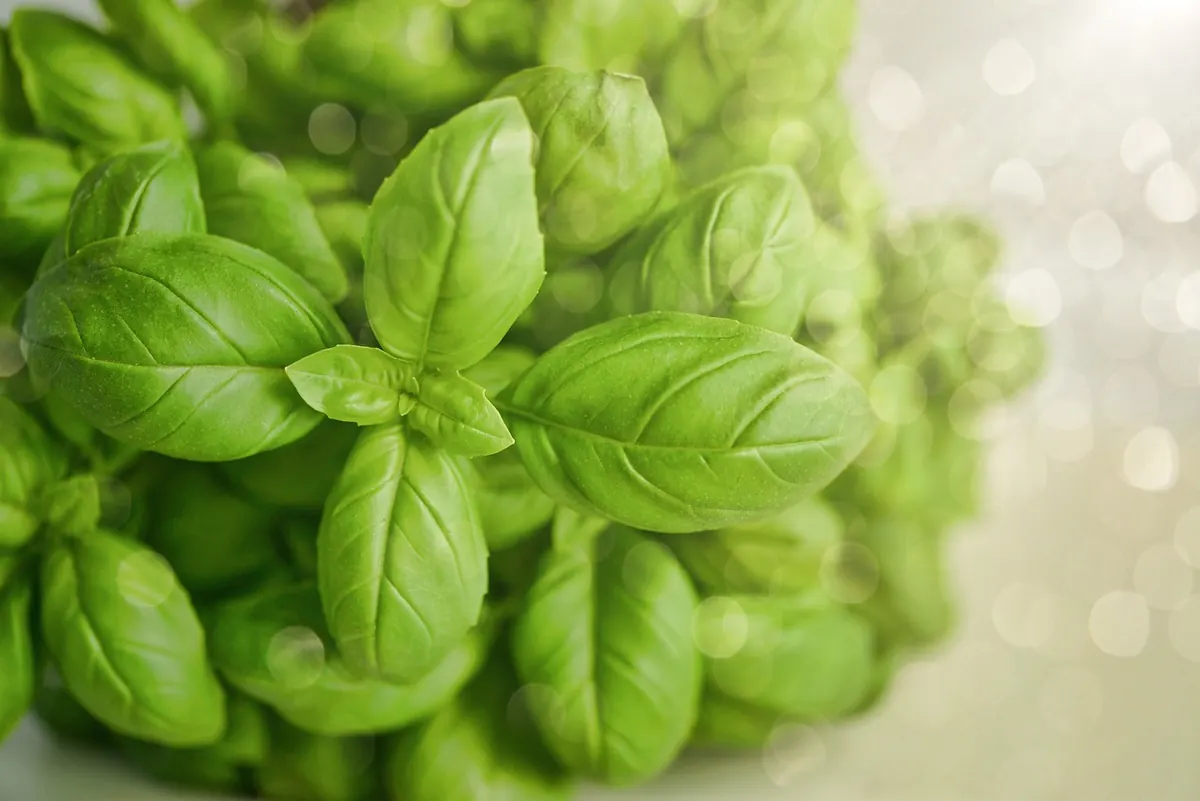
Genovese is what most people mean by basil: large, soft, bright green leaves with a sweet anise and clove flavour and little of the bitterness other types can carry. 'Genovese' itself, 'Gigante' and the broad, crinkled 'Lettuce Leaf' are all worth growing. It is also the most straightforward of the five in Britain, although "straightforward" is relative — it still wants sun, warmth and a decent-sized pot.
In containers, give it 25–30cm of depth and width, a well-drained peat-free multipurpose compost, and water at the base in the morning rather than overhead in the evening. Once you are cutting heavily, feed every fortnight with a tomato feed. Pinch out the growing tip above a pair of leaves every couple of weeks; each pinch turns one stem into two and delays flowering. That matters, because once flowers open the leaves lose flavour and production slows. For pesto, cut in the morning before the sun is high, when the leaves are at their most aromatic.
Greek basil — small leaves, small pots, big flavour
Greek basil makes a dense, rounded bush around 20–25cm tall with leaves the size of a fingernail. The flavour is sharper and more peppery than Genovese, and it is excellent scattered over tomatoes, eggs, grilled courgettes and fish. Because it stays compact and branches readily, it suits a 12–15cm pot on a sunny windowsill, the front of a herb planter, or the edge of a raised bed where you brush past it on the way to the door.
It flowers easily, so snip the tips regularly. The flowers are edible and attractive to pollinators, but pinching keeps the leaf supply coming. Water carefully: small pots dry out fast, yet sitting in soggy compost is worse for basil than a short dry spell.
Thai basil — aniseed, purple stems, best under cover
Thai basil, usually sold as 'Siam Queen', has narrow leaves, purple stems and purple flower bracts, with a pronounced aniseed and clove flavour. That flavour survives heat far better than Genovese, which is why it belongs in stir-fries, curries and noodle broths, added near the end of cooking. It also makes a fine raw garnish.
In Britain, treat it as the slightly tender member of the group. Cool nights slow it down and it can look thoroughly miserable in an exposed border; a greenhouse, polytunnel or a large pot against a warm south-facing wall suits it far better. Keep pinching out flower spikes to hold it in leaf. If you leave it to set seed, it will stop producing.
Purple basil — colour, with a different flavour
'Dark Opal', 'Red Rubin' and 'Purple Ruffles' bring deep burgundy leaves and pink flowers. The flavour leans more towards clove than anise and is generally less sweet than Genovese, which makes it well suited to dressings, flatbreads and salads. The colour fades in cooking, so use purple basil raw or add it at the last moment. Strong light gives the deepest colour, so a sunny position really does matter here. Growth is usually a little slower and less lush than green Genovese, so sow a few extra plants if you want plenty. Leaves steeped in white wine vinegar make a striking bottle for the kitchen shelf.
Lemon basil — citrus scent, quick to flower
Lemon basil and its close relative lime basil carry a clean citrus aroma, with small, thin leaves and a light, sherbet-like flavour. It is best raw: with fish, in fruit salads, in cold drinks, and in Southeast Asian cooking where the citrus note is part of the point.
It is the shortest-lived of the five in UK conditions, largely because it flowers young. Succession sowing is the answer — a small pot every four to six weeks from April to July — which gives a continuous supply rather than one brief glut. It does well on a bright windowsill or in a greenhouse bed, and it needs the same warmth as Thai basil. Don't cook it; the aroma vanishes.
Matching the variety to the space you have
- Sunny kitchen windowsill, 12–15cm pot: Greek basil, or lemon basil if you can sow in succession.
- One big pot on a warm patio: Genovese, in 25–30cm of compost, watered at the base.
- Greenhouse, polytunnel or sheltered south wall: Thai and lemon basil, which need the extra warmth.
- Salad bowl and colour: purple basil, used raw.
- Bulk pesto for the freezer: Genovese or 'Lettuce Leaf'.
Growing points that matter more than the variety
- Sow thinly, about 1cm deep, in fresh seed compost at 18–21°C. Germination usually takes five to ten days.
- Water at the base, in the morning where possible. Wet leaves overnight invite trouble.
- Give plants air. An open window or a small fan in a greenhouse discourages both damping off and downy mildew.
- Remove yellowing or mottled leaves promptly and bin them rather than composting them.
- Feed lightly once plants are established and being cut regularly — every two weeks is plenty.
- Harden off over a week before planting out, and keep a fleece handy for cold nights in early June.
Start with two pots
If you grow nothing else this year, sow Genovese in a 25cm pot in late April for pesto, and Greek basil in a small pot on the windowsill for daily cutting. Add Thai basil only if you have a greenhouse or a genuinely warm wall. Sow a second batch of Genovese in early July to carry you into September, since older plants tire and leaf quality drops.
Above all, watch the damp. Good air movement, morning watering at the base and prompt removal of struggling leaves will prevent most of what goes wrong with basil in a British summer — and the variety you chose will then have a fair chance to show what it can do.
Photo: Pexels / Pixabay